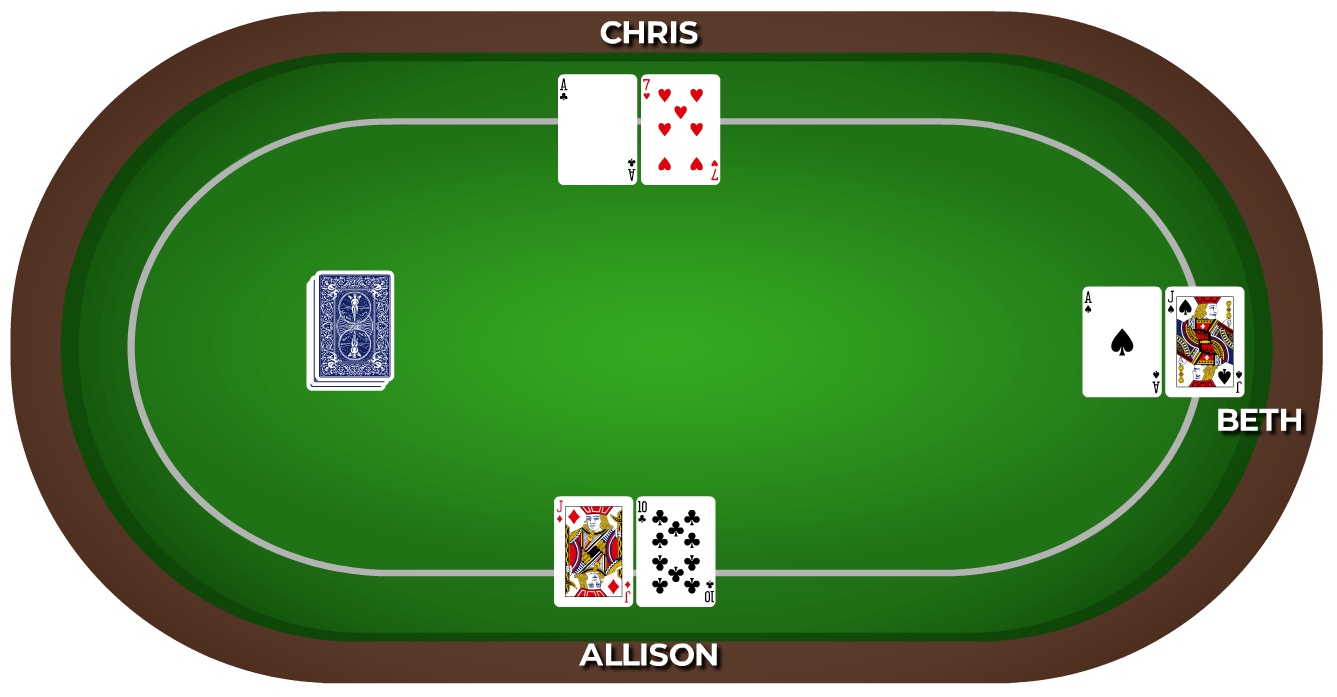
Why do we check it down when a player is all-in? Let’s take a look at one example.
Chris, who has a short stack, shoves all in for 8 blinds, with A7O.
Beth, who has Chris covered, just calls, with AJS.
Allison, who also has Chris covered, also calls with JTO.
The flop comes Ten, Eight, Four, rainbow.
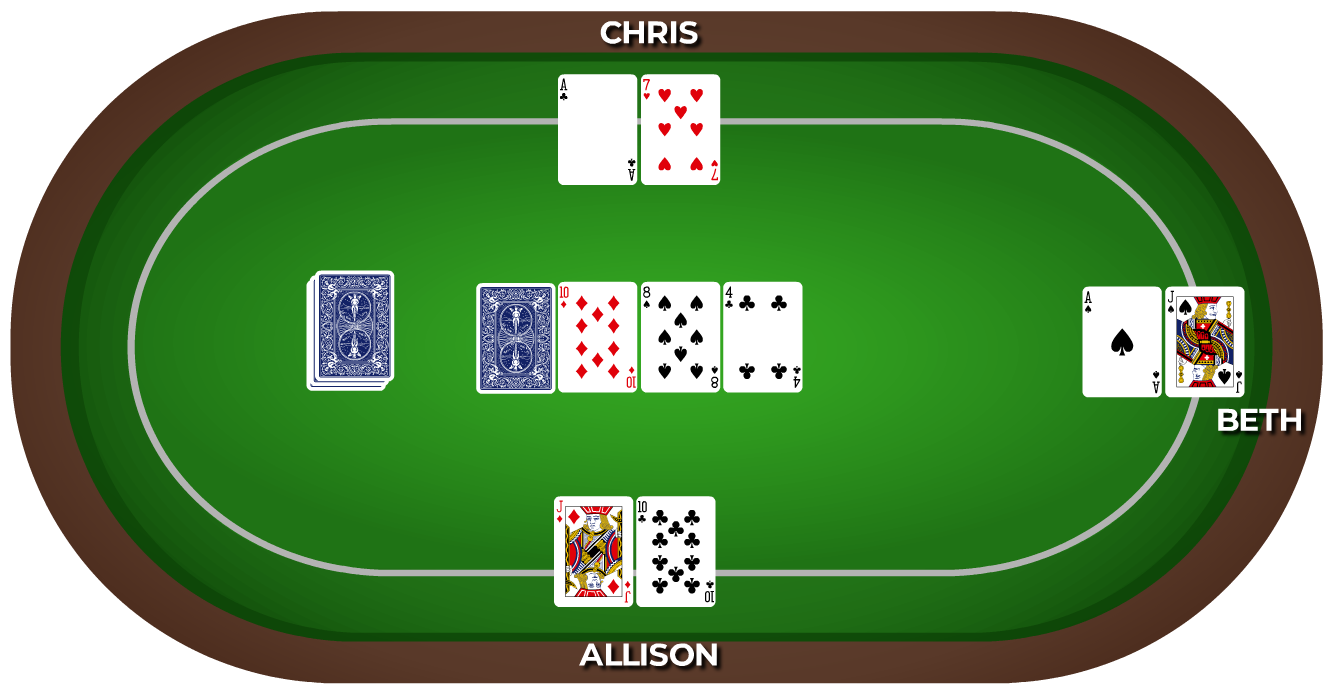
Allison, with top pair, places a large, forcing Beth to fold.
The turn comes a Two.
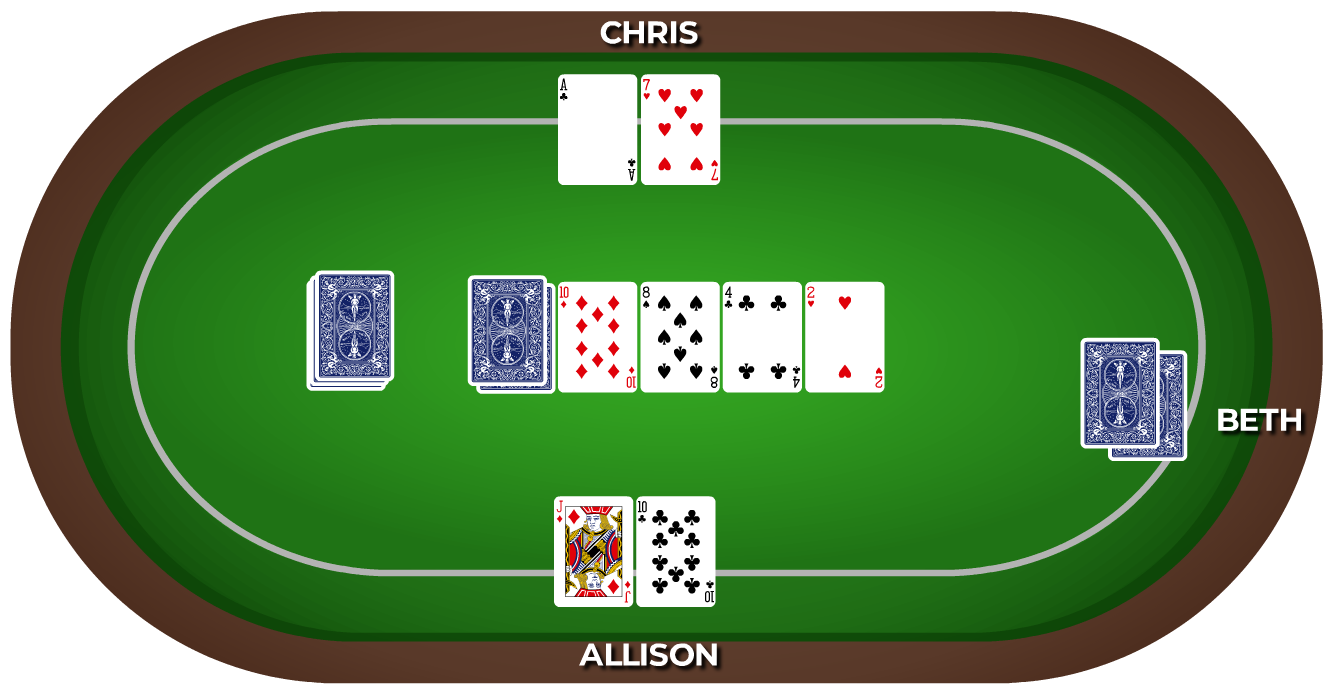
The river comes an Ace.
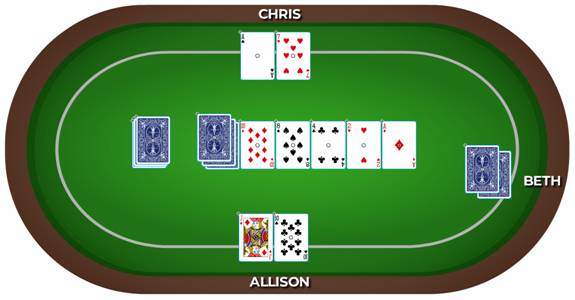
Chris wins.
Allison loses 8 blinds. Chris triples up.
By betting, Allison has lost 8 blinds and tripled Chris up.
Had Allison checked, she would still have lost 8 blinds – to Beth – but Chris would be eliminated and both Allison and Beth would move up the ladder
Let’s play it again.
The flop comes Ten, Eight, Four, rainbow.
Allison, with top pair, checks.
Beth checks behind.
The turn comes a Two.
Check. Check.
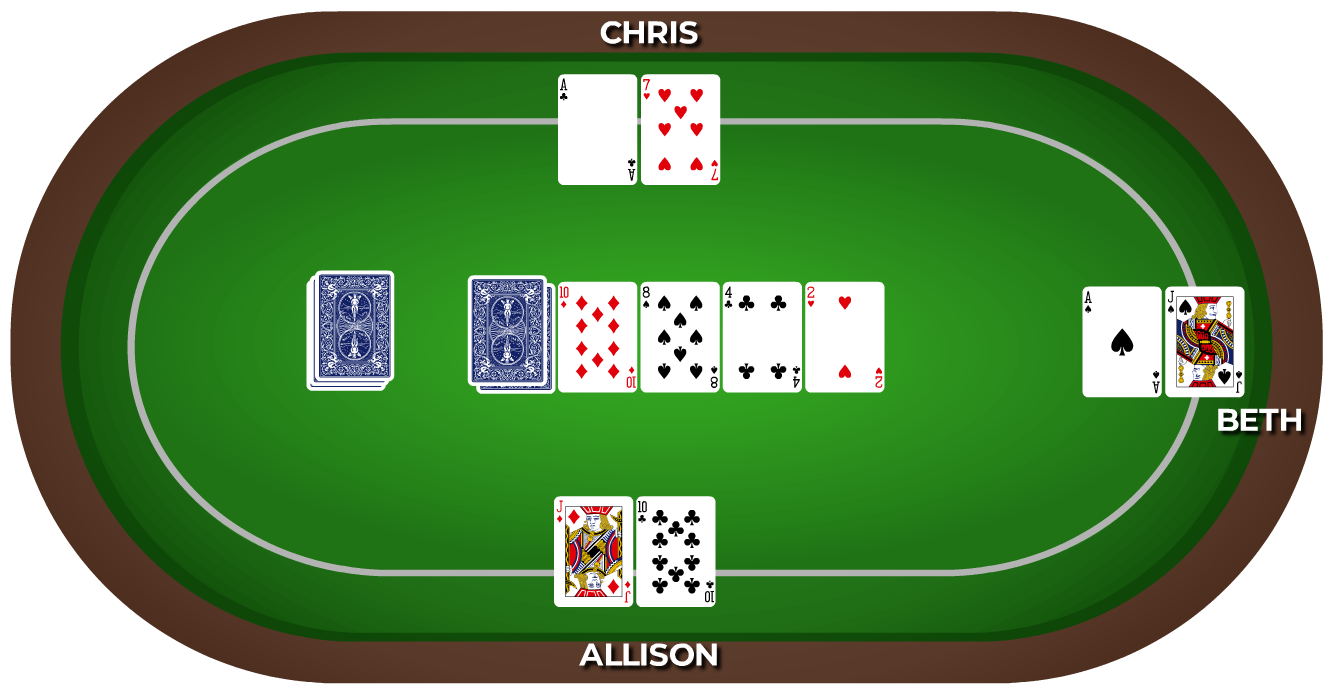
The river comes an Ace.
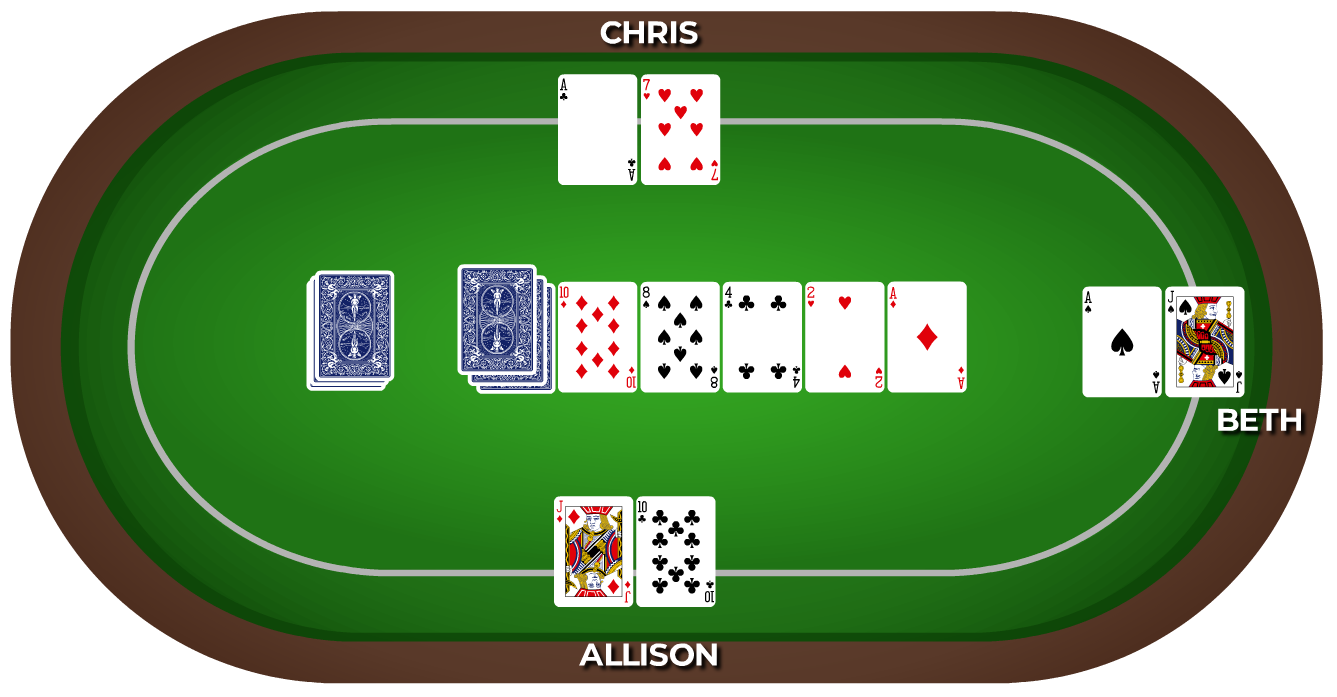
Beth wins.
Allison loses 8 blinds. Chris is eliminated.
By checking, Allison has eliminated Chris.
She lost 8 blinds, but she was always going to lose 8 blinds, whether Beth folded or not.
The only time Allison benefits from betting is when she can get Beth to call with a worse hand. If Beth folds, it never benefits Allison. Even if Allison wins, she only wins the 24 blinds in the middle, and she was always going to win those 24 blinds.
By checking, Allison has two chances of eliminating Chris; she could win, or Beth could win. Either way, Chris is eliminated and both Allison and Beth move up the ladder.