
If you hate charts, graphs, and numbers, skip directly to the key issue.
Hoolign has proposed a new points system whereby every player receives (Number of players – (Finish – 1)). In a 3-person game, for example, the winner would receive 3 points, 2nd would receive 2 points and 3rd would receive 1.
The following two graphs show what the awarded points would look like from a single, 10-player game. Both graphs show the same data. You can see that the distribution of the proposed “Hool” system is a straight line, while the existing GSOP system is a curve.
(NOTE: I have multiplied the Hoolign system points by 3 in all graphs in this post, for easier comparison with the GSOP system.)
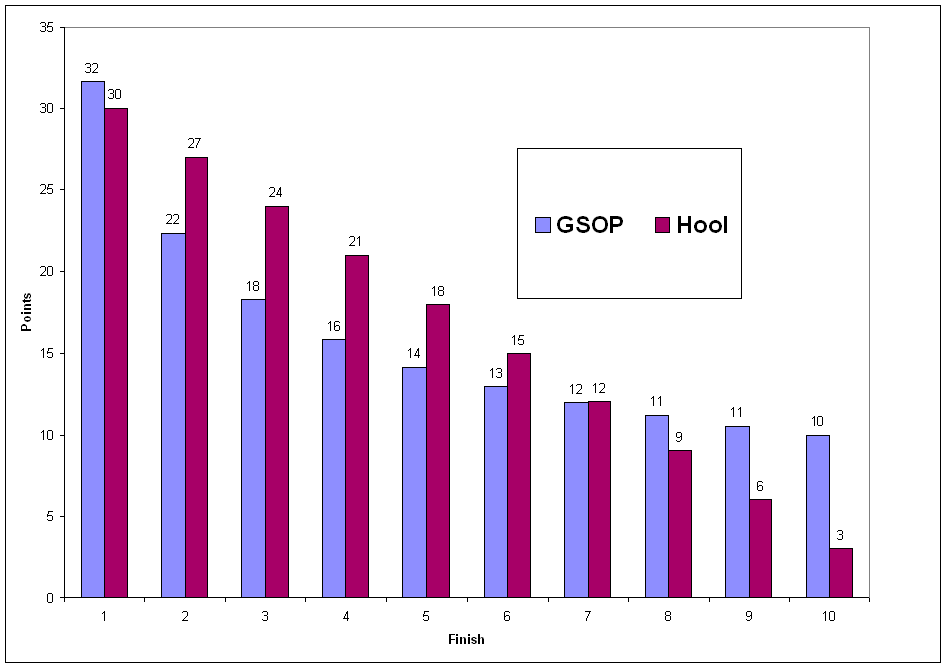
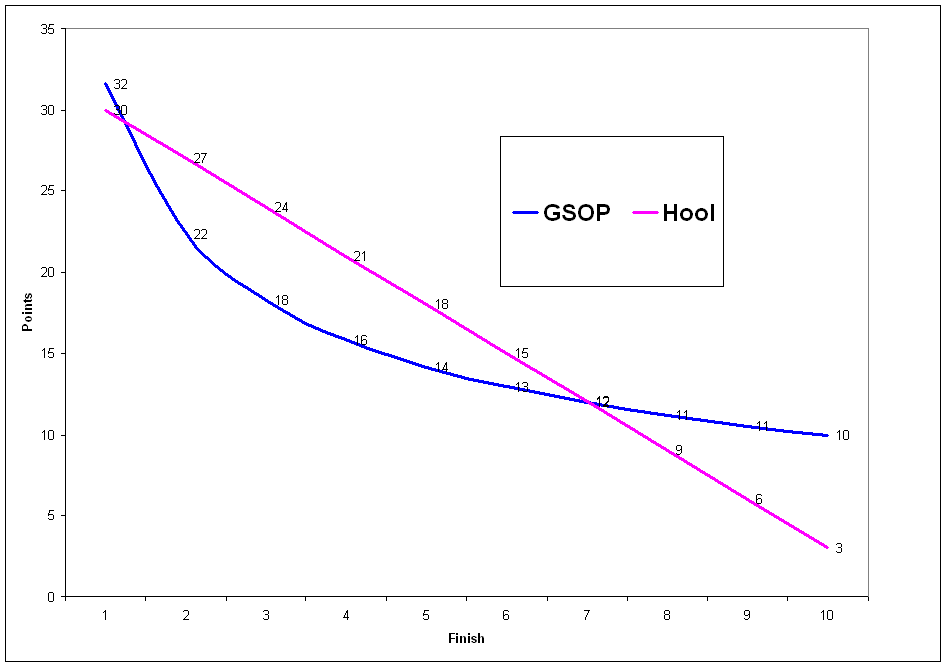
In the Hoolign system, first place awards 10 times as many points as tenth (30 vs 3). In the GSOP system, first place awards about three times as many points as tenth (32 vs 10). However, the GSOP system awards first place 50% more points than second place (32 vs 22), while the Hoolign system awards only 11% more points to first than to second (30 vs 27).
In the Hoolign system, the difference in points from place to place is constant. (In the above example, every place pays exactly 3 more points than the place below it.)
In the GSOP system, the farther up you finish, the greater your advantage over those who finished below you. The difference between 9th and 10th is only one point, while the difference between first and second is 10 points.
I’ve put together a graph of how the Hoolign system would have fallen out during 2013. As you can see, the general shape of the data remains unchanged, but several players swap places.

One reason for the proposed change was to induce more variability in the points scores from week to week. However, if you look at the overall shape of the week-to-week data, you’ll see that there’s not a whole lot of discernible difference. In fact, you’d be hard pressed to tell which of the following graphs represents the 2013 GSOP system, and which represents Hoolign’s proposed system.

In fact, this is a graph of the actual GSOP points for 2013.
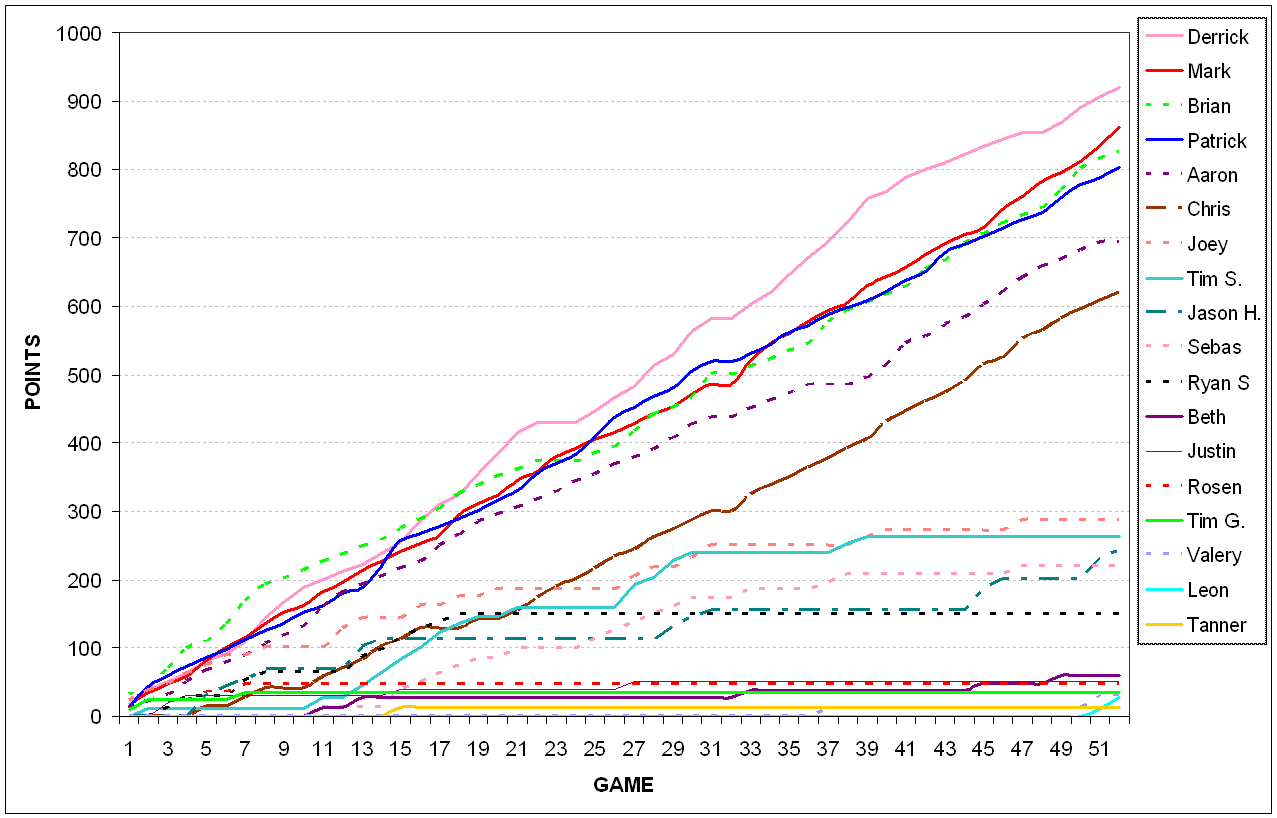
This graph shows what the points would have looked like under the proposed change.

We’d still have the same two people in first and second, although Mark would close the gap with Derrick.
Aaron would do MUCH worse under the new system while Chris would do much better, yielding a swap.
Patrick would score about the same but would swap places with Brian, who does much worse under the new system.
A Key Difference
There is a key difference between the two systems which I can illustrate thus:
We have two players, Abe and Barry. They each play three, 10-player games. Abe takes second place every time. Barry takes first once, second once, and third once. Both players have the same average finish – second place. Abe always finishes second, and Barry’s finishes average out to second place.
How should the point system treat these two players?
Since they have the same average finish, should they be awarded the same number of points? Should the points favor Barry, for winning one tournament where Abe won none? Or should the points favor Abe for his consistency and never finishing lower than second?
One of our two points system does give both players the same number of points (81). The other system favors Barry (72-to-67), rewarding him more for taking first than it punishes him for finishing third.
The question is, which of those two outcomes do we prefer? Which counts as ‘better?’
Barry should not be rewarded further because he donked out with K6 off suit. Consistently good play should be rewarded.
or at least it should not be punished.
Hey, he flopped bottom pair and a back-door straight draw. He was nearly 18% after the flop!
The difference shows up fairly well between Derrick and me. We both averaged a 4th place finish over the course of the year. But … Derrick won 14 tournaments to my 6.
The GSOP system favors him more for those wins, while the Hoolign system puts us very nearly in a tie.
Something similar happens between Aaron and Chris. Aaron averaged sixth place over the course of the year, but won 3 tournaments. Chris had a better average finish – fifth place – but only won a single tournament. Under the Hoolign system, Chris finishes better than Aaron, thanks to his higher average finish, despite winning fewer tournaments.